Ariana Rex
Quick Summary
The biggest thing to know is that dismissive avoidant attachment is not a personality disorder. It’s an attachment pattern where emotional closeness, vulnerability, and dependence can feel threatening, often leading someone to pull away as intimacy deepens. This can develop when early emotional needs were repeatedly dismissed, teaching self-reliance as the safer choice. It’s also different from Avoidant Personality Disorder, which involves broader social anxiety, fear of rejection, and feelings of inadequacy. The good news is that dismissive avoidant patterns can change through self-awareness, gradual vulnerability, healthy relationships, and appropriate therapy.
Someone in your life, maybe a partner, maybe you, keeps pulling away right as things get emotionally close. You’ve probably searched terms like “dismissive avoidant attachment” or “dismissive avoidant personality” trying to make sense of this pattern, and you’ve likely found a confusing mix of information that doesn’t always agree with itself. I want to clear this up for you today, honestly and specifically. Readers who found this useful often move on to our article about avoidant attachment in adults.
These two terms actually point toward genuinely different things, and understanding that distinction matters. Let’s walk through exactly what dismissive avoidant attachment is, how it shows up, why it develops, and importantly, how it differs from what people sometimes mean when they search for “dismissive avoidant personality,” since that phrase often gets confused with an entirely separate clinical concept.
What Dismissive Avoidant Attachment Actually Means?
Dismissive avoidant attachment is one of the recognized adult attachment styles, describing a pattern where someone values independence and self-reliance so strongly that emotional closeness itself starts to feel genuinely threatening, rather than comforting.
This attachment style typically develops when a child’s emotional needs were consistently dismissed, minimized, or met with discomfort by their early caregivers, teaching them that depending on others reliably leads to disappointment. As adults, people with this pattern often crave connection just like anyone else beneath the surface, but their nervous system has learned to treat vulnerability and dependence as risks worth avoiding, rather than something safe to embrace.
How Dismissive Avoidant Attachment Shows Up In Real Relationships?
This pattern tends to follow a fairly consistent, recognizable set of behaviors within romantic relationships, even though the underlying motivation isn’t always obvious from the outside.
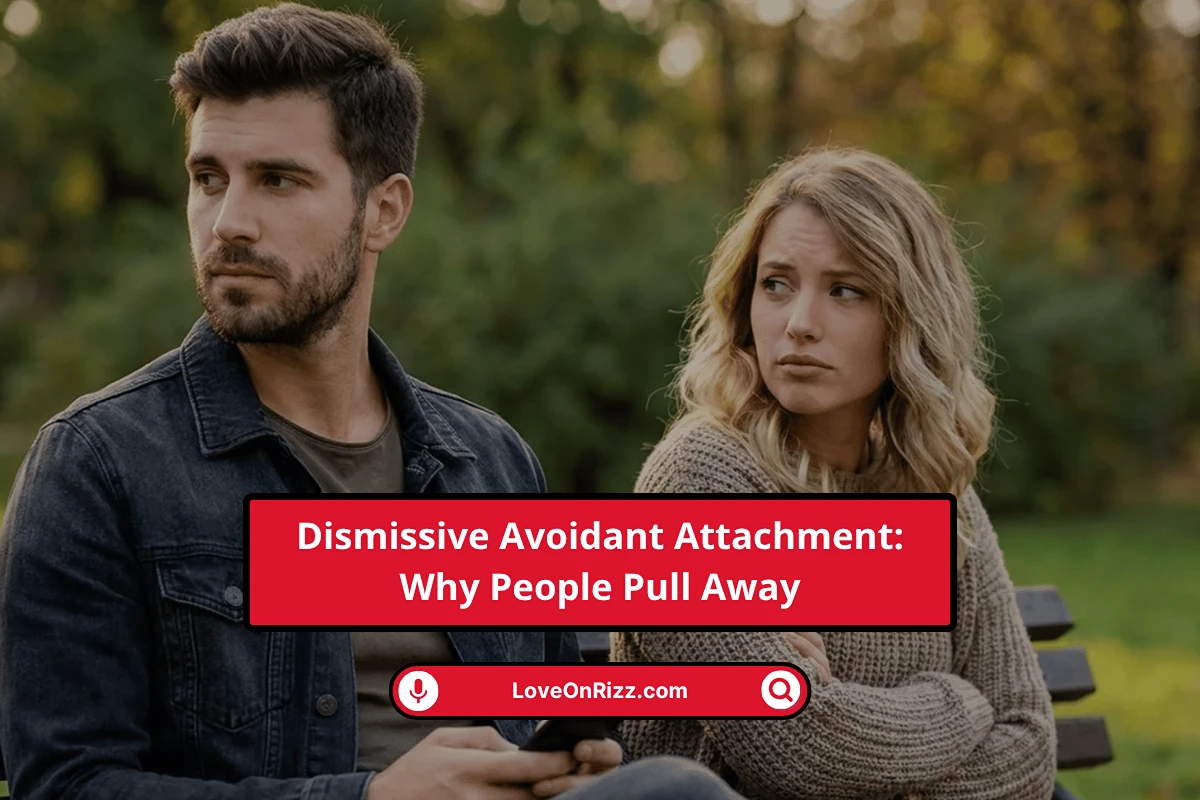
- Pulling away as relationships deepen: Just as intimacy increases, someone with this attachment style often creates distance, whether through withdrawal, subtle criticism, or simply becoming less available, even though part of them genuinely wants to stay connected.
- Difficulty expressing emotional needs: Admitting vulnerability or needing support feels uncomfortable, so these needs typically go unexpressed, with self-reliance functioning as the default coping strategy instead.
- Intense need for independence: While healthy independence is normal and valuable, this pattern often involves an exaggerated need for personal space and autonomy that goes beyond typical, healthy boundaries.
- Minimizing emotional and relationship needs: Rather than acknowledging genuine hurt or disappointment, someone with this pattern often convinces themselves these feelings aren’t significant enough to address directly.
- Discomfort with emotional closeness: A partner’s request for more connection or emotional availability can trigger real discomfort, even when that request is entirely reasonable and healthy.
Where Dismissive Avoidant Attachment Comes From?
Understanding the developmental origin of this pattern helps explain why it forms and why it can feel so deeply automatic, rather than a conscious choice someone makes.
This attachment style typically develops in response to caregivers who were emotionally unavailable, dismissive of a child’s feelings, or who explicitly valued stoicism and independence over emotional expression. A child raised in this environment learns an important early lesson, that needing someone reliably leads to disappointment or discomfort, making self-sufficiency the safer, more reliable strategy, a strategy that simply hasn’t updated itself even though their adult environment and relationships have genuinely changed.
Why “Dismissive Avoidant Personality” Isn’t Actually A Clinical Term?
Here’s where I want to offer some genuine clarity, since this phrase gets searched frequently but doesn’t actually correspond to a distinct clinical diagnosis. “Dismissive avoidant” specifically describes an attachment style, a relational pattern, not a personality disorder or formal diagnostic category on its own.
When people search “dismissive avoidant personality,” they’re often either referring to dismissive avoidant attachment using slightly different wording, or they’re actually thinking of Avoidant Personality Disorder, a genuinely distinct, formally recognized condition in clinical diagnostic manuals. Understanding this difference matters significantly, since these two concepts, despite sharing similar-sounding names, describe genuinely different experiences.
How Avoidant Personality Disorder Actually Differs?
Avoidant Personality Disorder, unlike dismissive avoidant attachment, is a formally recognized clinical diagnosis centered primarily around intense social inhibition, feelings of inadequacy, and extreme sensitivity to criticism or rejection.
- Avoidant personality disorder involves social avoidance: This condition typically affects someone’s comfort across nearly all social situations, including friendships and work relationships, not specifically romantic intimacy alone.
- Fear of inadequacy and rejection: Unlike dismissive avoidant attachment, where closeness itself feels threatening to autonomy, Avoidant Personality Disorder involves genuine fear of being judged, embarrassed, or found inadequate by others.
- Desire for connection despite social anxiety: This differs meaningfully from dismissive avoidant attachment, where the person often minimizes or avoids their own desire for closeness rather than being blocked by genuine social anxiety.
- Requires a formal clinical diagnosis: Unlike attachment styles, which are generally understood through self-reflection or informal assessment, Avoidant Personality Disorder involves specific diagnostic criteria that only a trained clinician can genuinely assess and diagnose.
Why This Distinction Genuinely Matters?
Understanding whether you’re dealing with dismissive avoidant attachment or something more aligned with Avoidant Personality Disorder significantly affects what kind of support and approach genuinely helps.
Dismissive avoidant attachment generally responds well to attachment-focused therapy, gradual exposure to vulnerability, and consistent, patient relational experiences that slowly challenge old patterns. Avoidant Personality Disorder, given its roots in pervasive social anxiety and fear of judgment, often benefits from different therapeutic approaches, sometimes including cognitive behavioral therapy specifically focused on social anxiety and self-worth, making accurate understanding of which pattern you’re actually experiencing genuinely important for finding the right kind of support.
How This Pattern Affects Both Partners In A Relationship?
Regardless of the exact clinical distinction, dismissive avoidant attachment specifically creates a real, recognizable relational dynamic worth understanding from both sides.
A partner of someone with this attachment style often feels confused or hurt by their partner’s tendency to withdraw right when things feel closest, sometimes interpreting this pattern as a lack of genuine care, when it typically reflects an old, automatic self-protective response instead. Meanwhile, the person with dismissive avoidant tendencies often experiences their own internal conflict, genuinely wanting connection while feeling a persistent, uncomfortable pull toward independence and distance whenever that connection starts to deepen. Anyone curious about the background can read more about dismissive avoidant attachment style in this reference.
Building Toward More Secure Connection
The genuinely encouraging news is that dismissive avoidant attachment isn’t a fixed, permanent trait, and meaningful movement toward more secure attachment is absolutely possible with consistent, intentional effort.
- Notice the urge to withdraw: When that familiar pull toward distance arises, pausing to genuinely examine what’s happening emotionally underneath it, rather than automatically following the urge, builds real self-awareness over time.
- Express small vulnerabilities with trust: Sharing minor needs or feelings, rather than immediately significant, high-stakes ones, helps build tolerance for vulnerability gradually rather than all at once.
- Work with an attachment-focused therapist: Professional support can help you understand your specific triggers and build practical tools for tolerating closeness at a genuinely manageable pace.
- Challenge the belief that needing others is weakness: Actively reminding yourself that healthy interdependence reflects security, not a loss of self, helps gradually shift this deeply ingrained, though outdated, core belief.
Frequently Asked Questions
Q1. Is dismissive avoidant attachment the same thing as dismissive avoidant personality?
Not exactly, since “dismissive avoidant” specifically describes an attachment style, a relational pattern, while “personality” often confusingly gets associated with Avoidant Personality Disorder, a distinct, formally recognized clinical diagnosis.
Q2. What’s the main difference between dismissive avoidant attachment and Avoidant Personality Disorder?
Dismissive avoidant attachment centers on discomfort with emotional closeness and dependence specifically within relationships, while Avoidant Personality Disorder involves pervasive social anxiety and fear of judgment across nearly all social contexts.
Q3. Can dismissive avoidant attachment be diagnosed by a doctor?
No, attachment styles aren’t formal clinical diagnoses, but rather patterns generally understood through self-reflection, informal assessment, or discussion with a therapist familiar with attachment theory specifically.
Q4. Does someone with dismissive avoidant attachment genuinely want close relationships?
Yes, though this desire often coexists with significant discomfort around vulnerability and dependence, creating an internal pattern where genuine connection feels desired yet simultaneously threatening to their sense of independence.
Q5. Is Avoidant Personality Disorder more serious than dismissive avoidant attachment?
They’re genuinely different in nature rather than one being simply “more serious,” since Avoidant Personality Disorder involves a formal clinical diagnosis with specific criteria, while dismissive avoidant attachment describes a relational pattern that exists on a spectrum.
Q6. Can someone have both dismissive avoidant attachment and Avoidant Personality Disorder?
It’s possible for these patterns to coexist, since they represent different, though occasionally overlapping, aspects of someone’s psychological experience, and a mental health professional can help clarify which patterns are genuinely present.
Q7. Can dismissive avoidant attachment change over time?
Yes, attachment styles are considered changeable, particularly through therapy, self-awareness, and consistent, healthy relational experiences that gradually challenge and update these old, automatic patterns.
Q8. How can I tell if my partner has dismissive avoidant attachment versus simply needing space?
Consider whether their need for distance specifically intensifies as emotional closeness increases, and whether this pattern consistently repeats across the relationship, rather than reflecting occasional, healthy need for normal personal space.
Q9. What kind of therapy helps most with dismissive avoidant attachment specifically?
Attachment-focused therapy, which helps identify specific triggers and gradually build tolerance for vulnerability and emotional closeness, tends to be particularly effective for addressing this specific relational pattern.
Q10. Is it possible to have a healthy relationship with someone who has dismissive avoidant attachment?
Yes, especially with mutual understanding, patience, and often professional support, since this pattern can genuinely shift toward more secure attachment with consistent, intentional effort from both partners involved.
Final Words
Understanding the real difference between dismissive avoidant attachment and the more clinical concept of Avoidant Personality Disorder genuinely matters, both for accurately understanding your own patterns and for finding the right kind of support moving forward. These terms, despite sounding similar, point toward meaningfully different experiences. If it helps, we have also written about avoidant style advice.
Whether you’re recognizing dismissive avoidant tendencies in yourself or navigating this pattern with a partner, know that genuine understanding is the first step toward real change. With patience, self-awareness, and the right kind of support, moving toward more secure, comfortable connection is absolutely within reach.