Ariana Rex
Quick Summary
Avoidant attachment is not a lack of love or an inability to connect. It’s a learned pattern where emotional closeness can feel threatening, so you protect yourself by withdrawing, minimizing your needs, or leaning hard on independence. It often develops when childhood emotional needs were dismissed, but it can change. The key is noticing your urge to pull away, practicing vulnerability in small steps, communicating when you need space, and challenging the belief that needing someone makes you weak. With patience, supportive relationships, and sometimes therapy, avoidant attachment can move toward a more secure way of loving.
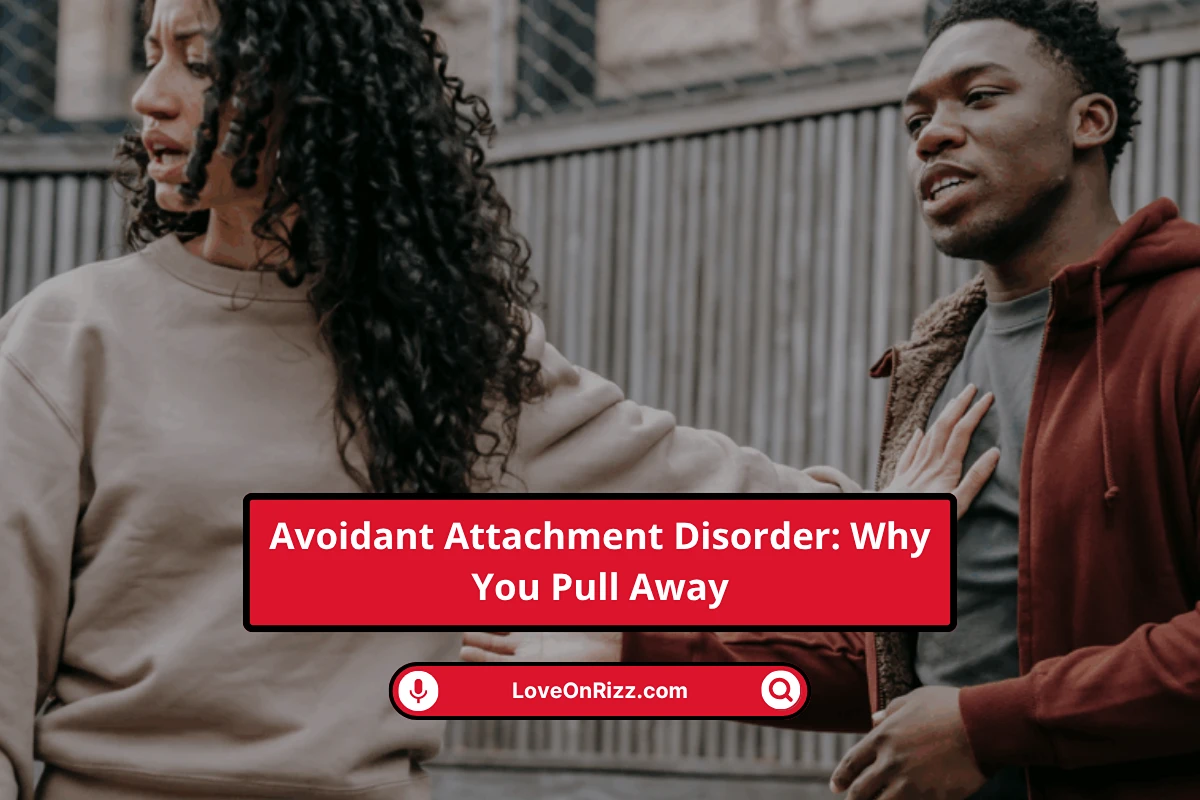
Someone starts getting close to you, really close, and instead of feeling happy, you feel this quiet urge to pull back. Maybe you suddenly get busier at work. Maybe you stop replying as quickly, or you find small reasons to pick a fight right when things start feeling intimate. Later, you wonder why you keep doing this to relationships you actually want to work.
If this sounds painfully familiar, you might be dealing with what’s commonly called avoidant attachment, sometimes referred to as avoidant attachment disorder. I want to walk you through what this really is, why it develops, and most importantly, how you can start building relationships where closeness feels safe instead of suffocating. You’re not incapable of love. You just learned, somewhere along the way, that closeness comes with a cost. For the next step, our advice on fearful avoidants is worth bookmarking.
What Avoidant Attachment Actually Is?
Avoidant attachment is a relational pattern rooted in attachment theory, which explains how our earliest bonds with caregivers shape the way we connect with people as adults. When a child’s emotional needs were consistently dismissed, ignored, or met with discomfort, that child often learns to suppress their needs entirely and rely only on themselves.
Fast forward to adulthood, and that same self-protective strategy shows up in romantic relationships. You crave connection just like anyone else, but the moment someone gets emotionally close, your nervous system reads it as a threat rather than a comfort. It’s not that you don’t care. It’s that caring, and needing someone in return, feels dangerously vulnerable.
How Avoidant Attachment Shows Up In Relationships?
This pattern has a way of quietly running the show in relationships, often without either partner fully understanding what’s happening. Here’s what it commonly looks like from the inside and outside.
- You pull away right when things get serious. Just as a relationship starts deepening emotionally, you might create distance through busyness, subtle criticism, or simply going quiet, even though part of you genuinely wants to stay close.
- You struggle to ask for help or express needs. Admitting you need comfort or support feels uncomfortable, almost embarrassing, so you handle things alone even when support is right there waiting for you.
- You prioritize independence over intimacy. You might tell yourself, and your partner, that you just really value your alone time and personal space, when underneath, it’s often more about avoiding vulnerability than genuinely needing solitude.
- You feel suffocated by too much closeness. A partner wanting more time together, more emotional check-ins, or more physical affection can trigger a wave of discomfort that feels hard to explain, even to yourself.
- You minimize your own feelings. When something upsets you, you might convince yourself it’s not a big deal or that you shouldn’t need to talk about it, because expressing emotional needs feels like a weakness.
- You idealize being single or keep one foot out the door. Even in a committed relationship, part of you might romanticize the idea of being unattached, or you subtly avoid full commitment as a kind of emotional insurance policy.
Why This Pattern Develops?
Understanding the root of this pattern tends to soften a lot of self-judgment, so let’s talk about where it usually comes from. Avoidant attachment typically forms in early childhood, often with caregivers who were emotionally unavailable, dismissive of a child’s feelings, or who valued independence and stoicism above emotional expression. You can read more about why dismissive avoidants pull away in our dedicated guide.
A child in that environment quickly learns an important survival lesson: needing someone leads to disappointment, so it’s safer not to need anyone at all. This isn’t a conscious decision a child makes. It’s an adaptive response that helped them cope at the time, and it simply hasn’t updated itself in adulthood, even though the environment around you has changed completely.
How This Affects Both Partners?
I want to be honest with you about the ripple effects here, because understanding them is part of what makes change possible. When one partner has an avoidant attachment style, the other partner often ends up feeling confused, rejected, or like they’re always chasing emotional closeness that keeps slipping away.
This dynamic frequently pairs up with someone who has more anxious attachment tendencies, creating a painful push-pull cycle where one person seeks reassurance and the other retreats further, which only intensifies the anxious partner’s fear of abandonment. Meanwhile, the avoidant partner often ends up feeling misunderstood too, as though their need for space is constantly being framed as a character flaw rather than a genuine, if outdated, coping mechanism.
What You Can Do To Build Secure Connection?
The good news, and I really mean this, is that attachment styles aren’t life sentences. With awareness and consistent effort, avoidant patterns absolutely can shift toward something more secure and fulfilling.
- Notice the urge to withdraw without immediately acting on it. When you feel that familiar pull to create distance, pause and ask yourself what’s actually happening emotionally underneath that urge, rather than following it automatically.
- Practice small acts of vulnerability. Start by sharing a minor feeling or need with your partner, something low-stakes, and notice that expressing it doesn’t actually lead to the rejection your nervous system is expecting.
- Work with a therapist familiar with attachment theory. A trained therapist can help you understand your specific triggers and gently guide you through building tolerance for emotional closeness at a manageable pace.
- Communicate your need for space instead of just disappearing. Telling your partner “I need some time to process, but I’m not going anywhere” preserves connection in a way that silent withdrawal never can.
- Challenge the belief that needing someone makes you weak. Remind yourself, as often as necessary, that healthy interdependence is a sign of security, not a loss of self, and that even the most independent people benefit from genuine support.
- Stay in the discomfort a little longer each time. Growth often happens right at the edge of your comfort zone, so when closeness feels overwhelming, try staying present for just a bit longer than your instinct tells you to.
How Partners Can Support Someone With Avoidant Attachment?
If you love someone with this attachment style, patience and consistency will serve you far better than pressure or ultimatums. Give them space without disappearing yourself, since the goal is showing that closeness and independence can coexist safely. Some readers also want to understand which attachment style you have, and we have covered that too.
Avoid taking their need for distance as personal rejection, and instead, gently invite connection without demanding it on your timeline. Celebrate small moments of vulnerability when they happen, because for someone with this pattern, opening up even slightly takes real courage, even if it doesn’t look dramatic from the outside.
Frequently Asked Questions
Q1. Is avoidant attachment disorder an official mental health diagnosis?
Avoidant attachment is primarily a concept from attachment theory and is not itself a formal clinical diagnosis in the DSM. It’s best understood as a relational pattern or attachment style, though it can overlap with related conditions, and a therapist can help clarify what’s happening in your specific situation.
Q2. What’s the difference between avoidant attachment and simply being independent?
Genuine independence comes from a place of security and doesn’t prevent someone from being vulnerable when it matters. Avoidant attachment involves actively suppressing emotional needs and pulling away from closeness specifically to avoid vulnerability, even when connection is genuinely wanted.
Q3. Can two avoidant partners have a successful relationship?
It’s possible, though it often requires extra intentionality, since both partners may struggle to initiate emotional closeness or express needs. With mutual awareness and effort, two avoidant partners can build a relationship, but it typically benefits from conscious communication practices that don’t come naturally to either person.
Q4. Why do avoidant partners often pull away right after intimacy?
Emotional or physical intimacy can trigger a strong vulnerability response in someone with avoidant attachment, even when the experience itself was positive. Pulling away afterward is often an unconscious attempt to regain a sense of independence and safety after feeling exposed.
Q5. Can avoidant attachment change over time?
Yes, attachment styles are considered changeable, especially with therapy, self-awareness, and consistent relational experiences that challenge old expectations. Many people move toward what’s called earned secure attachment through sustained effort and supportive relationships.
Q6. How can I tell if my partner is avoidantly attached or just losing interest?
Avoidant attachment tends to follow a consistent pattern of pulling away specifically during moments of increased closeness, regardless of how the relationship is otherwise going. Losing interest typically shows up as a broader, more consistent decline in effort and engagement across the entire relationship, not just around intimacy.
Q7. Does avoidant attachment affect friendships too, or just romantic relationships?
It commonly affects friendships and family relationships as well, since the underlying discomfort with emotional closeness isn’t limited to romance. Many people with this pattern notice it shows up in how they handle vulnerability across all close relationships in their life.
Q8. What triggers someone with avoidant attachment the most?
Common triggers include a partner expressing strong emotional needs, requests for more commitment, or situations that require expressing vulnerable feelings openly. These moments can activate a deep-seated fear of losing independence or being let down, even when the request itself is reasonable.
Q9. Is therapy really necessary, or can this be worked through within the relationship alone?
While self-awareness and a supportive partner can help significantly, therapy often accelerates the process by identifying root causes and providing structured tools for change. It’s not strictly necessary for everyone, but it tends to make the process faster and less painful for both partners involved.
Q10. Can someone with avoidant attachment still fall deeply in love?
Absolutely, avoidant attachment affects how someone manages closeness, not their capacity to feel love. Many people with this pattern love deeply, even when their behavior doesn’t always reflect that on the surface, which is exactly why understanding the pattern matters so much.
Final Words
If you recognized yourself in this article, please hear me when I say this doesn’t make you incapable of love or destined to push everyone away forever. It means you learned, a long time ago, that self-reliance was safer than needing someone, and that lesson simply hasn’t caught up with the reality of who you’re with today. For an academic take, see this university page on attachment strategies in adults.
Real, secure connection is absolutely available to you, and it starts with small, brave choices to stay present instead of retreating when things get real. You don’t have to overhaul who you are overnight. You just have to keep choosing connection, one small vulnerable moment at a time, and trust that closeness doesn’t have to cost you yourself.