Ariana Rex
Quick Summary
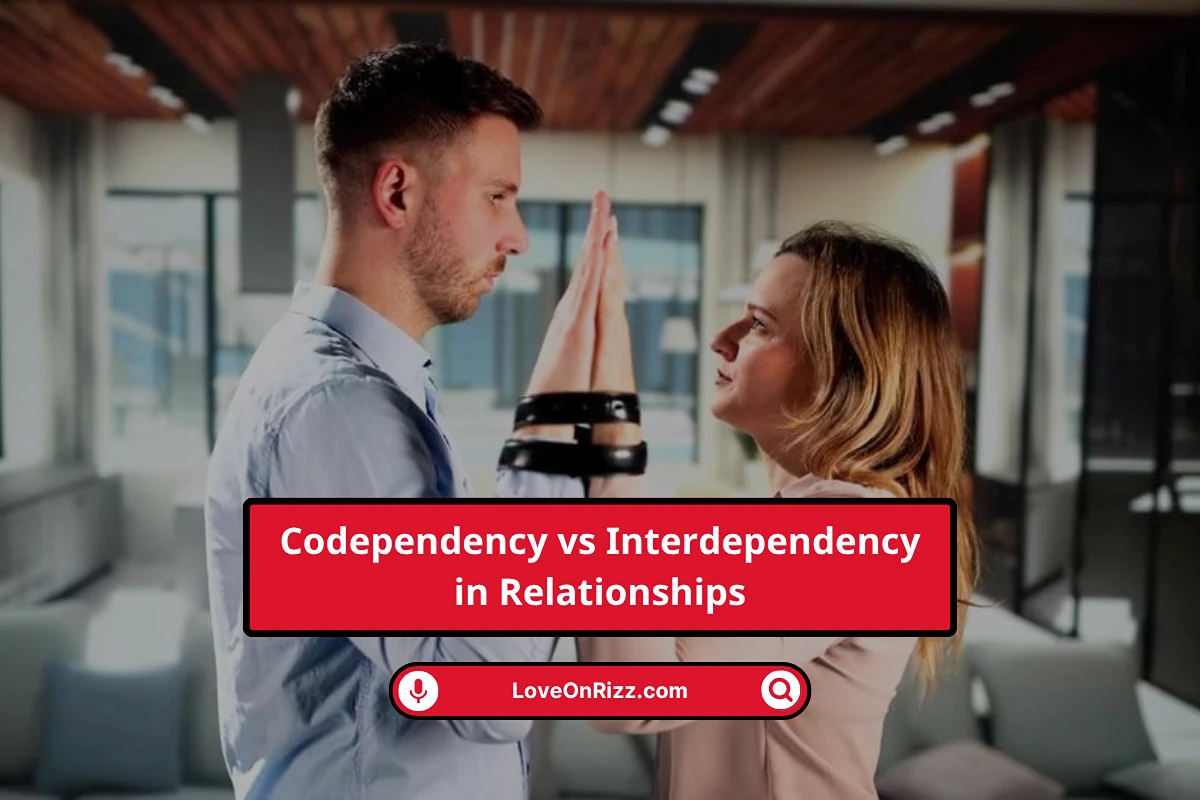
Codependency can make love feel like constant reassurance, emotional merging, and fear of being alone, while interdependency lets two whole people stay close without losing themselves. The difference is that codependency ties your emotional stability and self-worth to your partner, while interdependency builds connection through choice, trust, boundaries, and separate identities. These patterns often come from earlier experiences, but they can change. Start by checking in with yourself, tolerating discomfort, rebuilding your own life, and learning that healthy love doesn’t require self-sacrifice.
If you’ve ever felt like you can’t breathe without checking in with your partner first, or you’ve caught yourself losing pieces of who you are just to keep the peace, you’re not broken. You’re probably stuck in a pattern that a lot of us mistake for “true love.”
I hear this all the time in my coaching sessions. Someone tells me they feel suffocated, or guilty for wanting space, or terrified of being alone even for an evening. And when we dig into it, what looks like devotion is often something else entirely: codependency wearing the mask of closeness. A good companion to this is our look at setting boundaries without guilt.
So let’s talk about the real difference between codependency and interdependency, because understanding this one distinction can completely change how you experience love, connection, and yourself.
What Codependency Actually Looks Like?
Codependency isn’t just “caring a lot” about your partner. It’s a pattern where your sense of okay-ness becomes tied to someone else’s mood, choices, or approval.
You start making decisions based on how they’ll react instead of what you actually want. Your emotional weather changes depending on theirs, and over time, you lose track of where you end and they begin. We cover staying independent in a relationship in depth elsewhere on the site.
Here’s what that pattern often looks like in real life:
- You feel responsible for fixing your partner’s emotions, even when their bad mood has nothing to do with you, and you find yourself walking on eggshells trying to manage how they feel.
- You struggle to make small decisions alone, whether it’s picking a restaurant or planning your weekend, because you’re used to running everything through your partner first.
- You stay in situations that hurt you because leaving feels scarier than staying, even when a part of you knows the relationship isn’t healthy anymore.
- You feel guilty for having needs, hobbies, or friendships that don’t include your partner, almost like wanting anything separate is a betrayal.
- You measure your worth by how needed you are, so you unconsciously keep your partner a little dependent on you too, because being needed feels safer than being loved for who you are.
None of this makes you a bad partner. Honestly, codependency usually grows out of a good heart that learned somewhere along the way that love means self-sacrifice. But good intentions can still build an unhealthy foundation.
What Interdependency Actually Looks Like?
Now let’s flip it. Interdependency is what a lot of relationship psychology considers the gold standard, and it’s very different from codependency, even though they can look similar on the surface. People in this situation often benefit from reading about why crushes feel so intense.
In interdependency, you and your partner are two whole people who choose to lean on each other. You rely on them, sure, but you don’t dissolve into them.
Here’s what that tends to look like day to day:
- You can comfort your partner without absorbing their emotions as your own, offering support while still staying grounded in your own feelings and perspective.
- You make decisions with your partner in mind, but you’re still capable of deciding things solo, and neither of you needs the other’s permission to have a full life.
- You can sit with disagreement without panicking, because conflict doesn’t feel like the relationship is about to collapse.
- You maintain friendships, interests, and goals outside the relationship, and your partner genuinely supports that instead of feeling threatened by it.
- You trust that you can survive time apart, whether it’s a work trip or an off night, without spiraling into fear that the connection is falling apart.
Interdependent couples still need each other. That part never goes away, and honestly, it shouldn’t. Humans are wired for connection. The difference is that the need doesn’t come from fear, it comes from choice. Pairing this with our advice on pulling away from love can help the ideas stick.
Why This Distinction Matters So Much?
A lot of people confuse intensity with intimacy. When you’re codependent, the relationship can feel incredibly intense, constant texting, constant reassurance, constant merging of plans and identities.
But intensity isn’t the same thing as safety. In fact, that intensity is often anxiety wearing a costume, not love.
Interdependency tends to feel calmer, even a little boring compared to the chaos of codependency. And that’s actually a good sign, because secure love doesn’t need drama to prove it’s real. To dig into the underlying ideas, see this write-up on understanding codependency.
Where Codependency Usually Comes From?
I always tell my clients this isn’t a character flaw, it’s a learned survival skill. Most codependent patterns trace back to something earlier in life.
- Growing up in a home where love felt conditional, so you learned early that being agreeable or self-sacrificing was how you earned affection and avoided conflict.
- Having a parent or caregiver who needed you to manage their emotions, which taught your nervous system that other people’s feelings are your responsibility to regulate.
- Experiencing a past relationship where independence was punished, so setting boundaries or having your own life felt dangerous instead of normal.
Once you see where the pattern came from, it becomes a lot easier to have compassion for yourself instead of shame. You didn’t choose this. You adapted to survive something, and now it’s just time to update the software.
How to Move From Codependency Toward Interdependency?
This shift doesn’t happen overnight, and honestly, that’s okay. It’s built through small, repeated choices, not one big dramatic transformation.
- Start noticing your emotional starting point before you check in with your partner, meaning ask yourself how you feel before asking how they feel, so you stay connected to your own inner compass.
- Practice sitting with discomfort instead of immediately fixing it, because tolerating a little anxiety when you don’t have reassurance is literally how you build emotional independence.
- Rebuild pieces of your identity outside the relationship, whether that’s a hobby, a friendship, or a goal that belongs only to you, since a full life outside the relationship makes the relationship healthier, not weaker.
- Get comfortable disappointing people sometimes, because a relationship where you can never say no isn’t intimacy, it’s fear management.
- Consider working with a therapist or coach if the codependent pattrn feels deeply rooted, especially if it traces back to childhood, because some patterns are easier to untangle with support than alone.
Frequently Asked Questions
Q1. Is codependency the same thing as being clingy?
Not exactly. Clinginess is usually a behavior, while codependency is a deeper pattern where your emotional stability depends on your partner’s mood, approval, or presence. Someone can be clingy in one relationship without being codependent, but codependency almost always shows up as some form of clinginess or excessive reassurance-seeking.
Q2. Can two codependent people be in a relationship together?
Yes, and it happens more often than people realize. Two codependent partners often create a cycle where each person’s need to be needed feeds the other’s fear of being alone, which can make the pattern feel intense and “meant to be” even though it’s actually unstable underneath.
Q3. Is it possible to be interdependent and still miss your partner intensely?
Absolutely. Missing someone is a normal, healthy emotion, and interdependent partners feel it too. The difference is that missing them doesn’t turn into panic, controlling behavior, or an inability to function while they’re away.
Q4. Does codependency only happen in romantic relationships?
No, codependency can show up in friendships, family relationships, and even work dynamics. It tends to be most visible in romantic relationships because of how emotionally intertwined couples become, but the underlying pattern isn’t limited to romance.
Q5. How can I tell if I’m being interdependent or just avoidant?
This is a great question because both can look like “independence” from the outside. The key difference is emotional availability. Interdependent people are comfortable being close and vulnerable, while avoidant patterns involve pulling away from intimacy altogether, even when it’s offered safely.
Q6. Can a codependent relationship become interdependent over time?
Yes, it’s absolutely possible, but it usually requires both partners to be aware of the pattern and willing to do the work. One partner alone can shift their own behavior, but real relational change tends to happen faster when both people are on board.
Q7. Why does interdependency sometimes feel less exciting than codependency?
Because codependency often runs on anxiety and adrenaline, which can feel like passion. Interdependency runs on safety and consistency, which can feel calmer or even underwhelming at first, especially if your nervous system is used to associating love with intensity.
Q8. Is needing reassurance from my partner a sign of codependency?
Not necessarily. Everyone needs reassurance sometimes, and that’s a normal part of healthy attachment. It becomes a codependency red flag when you can’t function or regulate your emotions without that reassurance, or when you need it constantly just to feel okay.
Q9. What’s the fastest way to start breaking a codependent pattern?
There’s no instant fix, but the first real step is usually building a habit of checking in with yourself before checking in with your partner. Practicing small moments of independent decision-making rewires the pattern over time more effectively than trying to change everything at once.
Q10. Does therapy help with codependency, or is coaching enough?
Both can help, and it often depends on where the pattern comes from. If codependency is rooted in childhood trauma or attachment wounds, therapy can offer deeper healing. Coaching is great for building practical skills and accountability once you understand the root of the pattern.
Final Words
If you recognized yourself in the codependent list, please don’t spiral into shame about it. I’ve been there myself, more than once, and it took real work to learn that loving someone doesn’t mean losing myself in them.
The goal was never to need your partner less. It’s to need them from a place of wholeness instead of fear, so love feels like an addition to your life instead of the whole foundation it’s built on. We have a separate piece that tackles unrealistic movie romance head on.
Interdependency is something you build one honest choice at a time, and every small step toward staying yourself while staying close to someone else counts, even the messy, imperfect ones.